
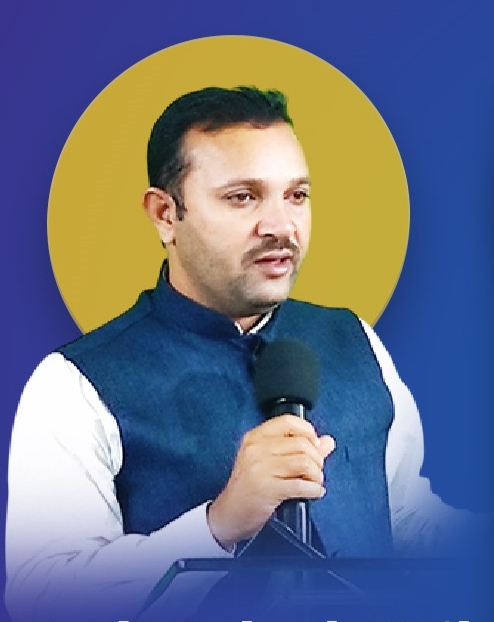
My dear friends, colleagues, and esteemed members, it is with profound honor and a deep sense of responsibility that I address you today as the Chairman of the Human Rights & Anti-Crime Association (HRACA). At HRACA, our very essence is rooted in a steadfast dedication to upholding justice, promoting human dignity, and combating crime through proactive engagement and systemic change.
Our association was founded on a comprehensive set of principles, driven by a singular and unwavering mission: to create a society where human rights are universally respected, and every individual can live free from fear, injustice, and discrimination. This mission guides every action and initiative we undertake.
The HRACA envisions a world where the fundamental rights and civil liberties of all individuals are not just recognized but actively protected and promoted. We believe that true progress can only be achieved when every person, regardless of their background, can exercise their rights without impediment. Our work is meticulously designed to empower citizens, ensuring they are aware of their entitlements and have the means to claim them. We strive to foster accountability at every level, pushing for transparency and responsibility from institutions and individuals alike. Ultimately, our goal is to build a robust framework of justice—a system that is fair, accessible, and serves everyone, with a particular focus on safeguarding the most vulnerable among us.
We are committed to this vital work, and together, with your continued support and dedication, we will strive tirelessly to realize this vision for a more just and equitable world.
Universal Declaration of Human Rights
The Universal Declaration of Human Rights (UDHR) is a landmark document in the history of human rights. Proclaimed by the United Nations General Assembly in Paris on 10 December 1948, it sets out, for the first time, fundamental human rights to be universally protected. Human rights are fundamental rights inherent to all human beings, regardless of race, sex, nationality, ethnicity, language, religion, or any other status.
Read More
Universal Declaration of Human Rights
The Universal Declaration of Human Rights (UDHR) is a landmark document in the history of human rights. Proclaimed by the United Nations General Assembly in Paris on 10 December 1948, it sets out, for the first time, fundamental human rights to be universally protected. Human rights are fundamental rights inherent to all human beings, regardless of race, sex, nationality, ethnicity, language, religion, or any other status. They are universal, inalienable, and indivisible, meaning they apply to everyone everywhere and cannot be taken away, and are interconnected and equally important. These rights encompass a wide range of freedoms and protections, including the right to life, liberty and freedom from slavery and torture, freedom of opinion and expression, and the right to work and education.
Preamble:-
Whereas recognition of the inherent dignity and of the equal and inalienable rights of all members of the human family is the foundation of freedom, justice and peace in the world, Whereas disregard and contempt for human rights have resulted in barbarous acts which have outraged the conscience of mankind, and the advent of a world in which human beings shall enjoy freedom of speech and belief and freedom from fear and want has been proclaimed as the highest aspiration of the common people, Whereas it is essential, if man is not to be compelled to have recourse, as a last resort, to rebellion against tyranny and oppression, that human rights should be protected by the rule of law, Whereas it is essential to promote the development of friendly relations between nations, Whereas the peoples of the United Nations have in the Charter reaffirmed their faith in fundamental human rights, in the dignity and worth of the human person and in the equal rights of men and women and have determined to promote social progress and better standards of life in larger freedom, Whereas Member States have pledged themselves to achieve, in cooperation with the United Nations, the promotion of universal respect for and observance of human rights and fundamental freedoms, Whereas a common understanding of these rights and freedoms is of the greatest importance for the full realization of this pledge, Now, therefore, The General Assembly, Proclaims this Universal Declaration of Human Rights as a common standard of achievement for all peoples and all nations, to the end that every individual and every organ of society, keeping this Declaration constantly in mind, shall strive by teaching and education to promote respect for these rights and freedoms and by progressive measures, national and international, to secure their universal and effective recognition and observance, both among the peoples of Member States themselves and among the peoples of territories under their jurisdiction.
Article 1:-
All human beings are born free and equal in dignity and rights. They are endowed with reason and conscience and should act towards one another in a spirit of brotherhood.
Article 2:-
Everyone is entitled to all the rights and freedoms set forth in this Declaration, without distinction of any kind, such as race, colour, sex, language, religion, political or other opinion, national or social origin, property, birth or other status. Furthermore, no distinction shall be made on the basis of the political, jurisdictional or international status of the country or territory to which a person belongs, whether it be independent, trust, non-self-governing or under any other limitation of sovereignty.
Article 3:-
Everyone has the right to life, liberty and the security of person.
Article 4:-
No one shall be held in slavery or servitude; slavery and the slave trade shall be prohibited in all their forms.
Article 5:-
No one shall be subjected to torture or to cruel, inhuman or degrading treatment or punishment.
Article 6:-
Everyone has the right to recognition everywhere as a person before the law.
Article 7:-
All are equal before the law and are entitled without any discrimination to equal protection of the law. All are entitled to equal protection against any discrimination in violation of this Declaration and against any incitement to such discrimination.
Article 8:-
Everyone has the right to an effective remedy by the competent national tribunals for acts violating the fundamental rights granted him by the constitution or by law.
Article 9:-
No one shall be subjected to arbitrary arrest, detention or exile.
Article 10:-
Everyone is entitled in full equality to a fair and public hearing by an independent and impartial tribunal, in the determination of his rights and obligations and of any criminal charge against him.
Article 11
- Everyone charged with a penal offence has the right to be presumed innocent until proved guilty according to law in a public trial at which he has had all the guarantees necessary for his defence.
- No one shall be held guilty of any penal offence on account of any act or omission which did not constitute a penal offence, under national or international law, at the time when it was committed. Nor shall a heavier penalty be imposed than the one that was applicable at the time the penal offence was committed.
Article 12:-
No one shall be subjected to arbitrary interference with his privacy, family, home or correspondence, nor to attacks upon his honour and reputation. Everyone has the right to the protection of the law against such interference or attacks.
Article 13:-
- Everyone has the right to freedom of movement and residence within the borders of each State.
- Everyone has the right to leave any country, including his own, and to return to his country.
Article 14:-
- Everyone has the right to seek and to enjoy in other countries asylum from persecution.
- This right may not be invoked in the case of prosecutions genuinely arising from non-political crimes or from acts contrary to the purposes and principles of the United Nations.
Article 15:-
- Everyone has the right to a nationality.
- No one shall be arbitrarily deprived of his nationality nor denied the right to change his nationality.
Article 16:-
- Men and women of full age, without any limitation due to race, nationality or religion, have the right to marry and to found a family. They are entitled to equal rights as to marriage, during marriage and at its dissolution.
- Marriage shall be entered into only with the free and full consent of the intending spouses.
- The family is the natural and fundamental group unit of society and is entitled to protection by society and the State.
Article 17:-
- Everyone has the right to own property alone as well as in association with others.
- No one shall be arbitrarily deprived of his property.
Article 18:-
Everyone has the right to freedom of thought, conscience and religion; this right includes freedom to change his religion or belief, and freedom, either alone or in community with others and in public or private, to manifest his religion or belief in teaching, practice, worship and observance.
Article 19:-
Everyone has the right to freedom of opinion and expression; this right includes freedom to hold opinions without interference and to seek, receive and impart information and ideas through any media and regardless of frontiers.
Article 20:-
- Everyone has the right to freedom of peaceful assembly and association.
- No one may be compelled to belong to an association.
Article 21:-
- Everyone has the right to take part in the government of his country, directly or through freely chosen representatives.
- Everyone has the right to equal access to public service in his country.
- The will of the people shall be the basis of the authority of government; this will shall be expressed in periodic and genuine elections which shall be by universal and equal suffrage and shall be held by secret vote or by equivalent free voting procedures.
Article 22:-
Everyone, as a member of society, has the right to social security and is entitled to realization, through national effort and international co-operation and in accordance with the organization and resources of each State, of the economic, social and cultural rights indispensable for his dignity and the free development of his personality.
Article 23:-
- Everyone has the right to work, to free choice of employment, to just and favourable conditions of work and to protection against unemployment.
- Everyone, without any discrimination, has the right to equal pay for equal work.
- Everyone who works has the right to just and favourable remuneration ensuring for himself and his family an existence worthy of human dignity, and supplemented, if necessary, by other means of social protection.
- Everyone has the right to form and to join trade unions for the protection of his interests.
Article 24:-
Everyone has the right to rest and leisure, including reasonable limitation of working hours and periodic holidays with pay.
Article 25:-
- Everyone has the right to a standard of living adequate for the health and well-being of himself and of his family, including food, clothing, housing and medical care and necessary social services, and the right to security in the event of unemployment, sickness, disability, widowhood, old age or other lack of livelihood in circumstances beyond his control.
- Motherhood and childhood are entitled to special care and assistance. All children, whether born in or out of wedlock, shall enjoy the same social protection.
Article 26:-
- Everyone has the right to education. Education shall be free, at least in the elementary and fundamental stages. Elementary education shall be compulsory. Technical and professional education shall be made generally available and higher education shall be equally accessible to all on the basis of merit.
- Education shall be directed to the full development of the human personality and to the strengthening of respect for human rights and fundamental freedoms. It shall promote understanding, tolerance and friendship among all nations, racial or religious groups, and shall further the activities of the United Nations for the maintenance of peace.
- Parents have a prior right to choose the kind of education that shall be given to their children.
Article 27:-
- Everyone has the right freely to participate in the cultural life of the community, to enjoy the arts and to share in scientific advancement and its benefits.
- Everyone has the right to the protection of the moral and material interests resulting from any scientific, literary or artistic production of which he is the author.
Article 28:-
Everyone is entitled to a social and international order in which the rights and freedoms set forth in this Declaration can be fully realized.
Article 29:-
- Everyone has duties to the community in which alone the free and full development of his personality is possible.
- In the exercise of his rights and freedoms, everyone shall be subject only to such limitations as are determined by law solely for the purpose of securing due recognition and respect for the rights and freedoms of others and of meeting the just requirements of morality, public order and the general welfare in a democratic society.
- These rights and freedoms may in no case be exercised contrary to the purposes and principles of the United Nations.
Article 30:-
Nothing in this Declaration may be interpreted as implying for any State, group or person any right to engage in any activity or to perform any act aimed at the destruction of any of the rights and freedoms set forth herein.
Human Rights in India
India, being a democratic republic, has enshrined various human rights in its Constitution, primarily in Part III, which deals with Fundamental Rights (Articles 12-35). These rights are legally enforceable, meaning citizens can approach the Supreme Court (under Article 32) or High Courts (under Article 226) if these rights are violated.
Here’s a breakdown of key human rights in India with their corresponding articles:
Read More
- Right to Equality (Articles 14-18)
- Article 16: Equality of opportunity in matters of public employment. This ensures equal opportunity for all citizens in matters relating to employment or appointment to any office under the state, with provisions for reservations for backward classes.
- Article 17: Abolition of Untouchability. The practice of “Untouchability” is abolished, and its practice in any form is forbidden. The enforcement of any disability arising out of “Untouchability” shall be an offense punishable in accordance with law.
- Article 18: Abolition of titles. This prohibits the state from conferring any title (except military or academic distinctions) and prevents citizens from accepting titles from foreign states.
- Right to Freedom (Articles 19-22)
- Article 19: Protection of certain rights regarding freedom of speech, etc. This article guarantees six freedoms to citizens:
(a) Freedom of speech and expression.
(b) To assemble peaceably and without arms.
(c) To form associations or unions (including cooperative societies).
(d) To move freely throughout the territory of India.
(e) To reside and settle in any part of the territory of India.
(g) To practice any profession, or to carry on any occupation, trade, or business.
- Article 20: Protection in respect of conviction for offenses. This provides protection against:
- Ex-post facto laws (no person shall be convicted of any offense except for violation of a law in force at the time of the commission of the act charged as an offense).
- Double jeopardy (no person shall be prosecuted and punished for the same offense more than once).
- Self-incrimination (no person accused of any offense shall be compelled to be a witness against himself).
- Article 21: Protection of life and personal liberty. No person shall be deprived of his life or personal liberty except according to procedure established by law. This article has been widely interpreted by the judiciary to include various rights, such as:
- Right to live with human dignity.
- Right to a clean environment.
- Right to privacy.
- Right to livelihood.
- Right to health.
- Right to shelter.
- Article 21A: Right to education. The state shall provide free and compulsory education to all children of the age of six to fourteen years in such manner as the State may, by law, determine.
- Article 22: Protection against arrest and detention in certain cases. This article lays down safeguards against arbitrary arrest and detention, including the right to be informed of the grounds of arrest, the right to consult and be defended by a legal practitioner, and the right to be produced before a magistrate within 24 hours of arrest.
- Right against Exploitation (Articles 23-24)
- Article 23: Prohibition of traffic in human beings and forced labor. This prohibits human trafficking, begar (forced labor without payment), and other similar forms of forced labor.
- Article 24: Prohibition of employment of children in factories, etc. This prohibits the employment of children below the age of 14 years in any factory or mine or engaged in any other hazardous employment.
- Right to Freedom of Religion (Articles 25-28)
- Article 25: Freedom of conscience and free profession, practice, and propagation of religion. Subject to public order, morality, and health, all persons are equally entitled to freedom of conscience and the right to freely profess, practice, and propagate religion.
- Article 26: Freedom to manage religious affairs. Subject to public order, morality, and health, every religious denomination or any section thereof shall have the right to establish and maintain institutions for religious and charitable purposes, manage its own affairs in matters of religion, and own and acquire movable and immovable property.
- Article 27: Freedom as to payment of taxes for promotion of any particular religion. No person shall be compelled to pay any taxes, the proceeds of which are specifically appropriated in payment of expenses for the promotion or maintenance of any particular religion or religious denomination.
- Article 28: Freedom as to attendance at religious instruction or religious worship in certain educational institutions. No religious instruction shall be provided in any educational institution wholly maintained out of State funds.
- Cultural and Educational Rights (Articles 29-30)
- Article 29: Protection of interests of minorities. Any section of the citizens residing in the territory of India or any part thereof having a distinct language, script, or culture of its own shall have the right to conserve the same.
- Article 30: Right of minorities to establish and administer educational institutions. All minorities, whether based on religion or language, shall have the right to establish and administer educational institutions of their choice.
- Right to Constitutional Remedies (Article 32)
Article 32: Remedies for enforcement of rights conferred by this Part. This is considered the “heart and soul” of the Constitution as it guarantees the right to move the Supreme Court for the enforcement of Fundamental Rights. The Supreme Court can issue various writs (Habeas Corpus, Mandamus, Prohibition, Quo Warranto, and Certiorari) to protect these rights.
VII. Beyond Fundamental Rights (Part III):
While Part III explicitly outlines fundamental human rights, other parts of the Constitution, particularly Part IV (Directive Principles of State Policy – Articles 36-51), also reflect human rights principles. Although not judicially enforceable, these principles guide the State in making laws and policies to promote social and economic justice, ultimately contributing to the realization of human rights. Examples include:
- Article 38: State to secure a social order for the promotion of welfare of the people.
- Article 39: Certain principles of policy to be followed by the State (e.g., equal pay for equal work, protection of children).
- Article 39A: Equal justice and free legal aid.
- Article 41: Right to work, to education, and to public assistance in certain cases.
- Article 47: Duty of the State to raise the level of nutrition and the standard of living and to improve public health.
Furthermore, India is a signatory to various international human rights conventions and treaties, such as the Universal Declaration of Human Rights (UDHR), the International Covenant on Civil and Political Rights (ICCPR), and the International Covenant on Economic, Social and Cultural Rights (ICESCR), which further influence the interpretation and application of human rights in the country.
RULES & REGULATIONS OF MEMBERSHIP
- The Members and Officers of HRACA are working on voluntary basis and no payment is given to them.
- HRACA Headquarters will not be responsible for any misuse of identity Card issued to the Membership during the course of their Membership with HRACA.
Read More
- On expiry, the Identity Cards must be submit to the HRACA Office. After expiry, renewal is a must under 30 days of expiry for regular membership. In case of change of Address, Mobile number, email id, Member should inform the same to the HRACA Office.
- In case of loss the identity Card / Appointment letter, inform the HR office in writing along with the Police Complaint letter immediately.
- All HRACA members should contact their respective District Head / State Head / ADG and HRACA office once in a month. Strict action will be taken against the Member, if found guilty floating the rules and regulation of HRACA.
- If you have any doubt, question or problem, please contact NCIB Headquarters.
- Any kind of misbehavior or misconduct mat result in rejection of membership of HRACA.
- Membership is non-transferable and once the payment is made, it is non-refundable.
- All right reserved to HRACA and all disputers subject to jurisdiction of Gonda only. Member Instructions & Guidelines: –
Welcome to the Human Rights & Anti-Crime Association (HRACA). By joining us, you are committing to the protection of human dignity, the promotion of justice, and the active prevention of crime.
Please review the following instructions carefully to ensure your application is processed correctly and to understand your responsibilities as a member.
1. Application Process: – To become a member, you must complete the official Membership Application Form and the Affidavit.
2. Ensure all fields are filled out clearly:
- Provide your full name, father’s/husband’s name, date of birth, gender, and blood group.
- Contact Information: Include a valid mobile number, WhatsApp number, and Email ID for official communications.
- Criminal Record Disclosure: You must truthfully declare if you have any criminal background, FIRs, or pending cases. Providing false information will lead to immediate rejection and potential legal action.
3. Required Documentation
Please attach the following documents to your application:
Photographs: Two (2) recent passport-size photographs.
Identification: A copy of your Aadhar Card (both Front and Back).
3. Membership Fees
Membership is categorized into two tiers:
General Membership: Rs. 1,000/-
Life Time Membership: Rs. 10,000/-
4. Code of Conduct and Responsibilities
As a member of HRACA, you pledge to abide by the following principles:
Uphold Human Rights: Actively participate in activities aimed at preventing child labor, bonded labor, custodial deaths, and police atrocities.
Combat Corruption: Monitor and report acts of injustice or corruption within government departments.
Legal Awareness: Help organize legal awareness camps to educate citizens on their constitutional rights and alternative dispute resolution (mediation/arbitration).
Protect the Vulnerable: Work specifically toward the protection of Dalits, women, and disadvantaged sections of society.
- Maintain Integrity: You must not engage in any activity detrimental to the reputation of the Association or against the laws of India
5. Legal Affirmation (Affidavit)
By signing the required Affidavit, you solemnly affirm that:
You are a citizen of India and of sound mind.
You have read and understood the aims, objectives, and rules of the Association.
You understand that membership can be terminated if you violate HRACA rules or if your conduct is found to be against the interests of the Association
.6. Submission
Once completed, the form and affidavit must be verified, signed, and dated.
Contact Information:
Address: Phase 6, G-33, Block G, Aya Nagar, New Delhi, India – 110047.
Website: www.hraca.org Email: hraca.org@gmail.com Cell: 9441293705.
Who can join with us?
Any person, who is attained the age to majority and willing to serve the nation irrespective caste, creed religion or Sex may join HRACA to serve to society and nation by become member of any category. He will have to submit following documents along with the application form.
1). Four passport size photo
2). Photocopy of ID Card i.e., Aadhar, Voter ID or Driving License etc,.
3). Fill the membership form along with Affidavit on Stamp paper of Rs. 100/-Attested by Notary Officer.
How can you join?
To fill the application through online or offline for membership by paying membership fee. Please visit join us page on website or contact us for more information.
Advantage of joining HRACA
- HRACA Membership will provided you an effective identify that will be useful to you in various field of life and also in collected vital news/information. Further HRACA Id card will help the Member in case of falling into kind of trouble.
- HRACA Member will be able to effectively protest/stop any illegal/anti-social activity that comes in their knowledge as per following due process of law.
- HRACA Members may provide vital information to security/intelligence agencies. They can obtain information from police/civil administration regarding any matter social importance.
- HRACA Administration will always assist/cooperate its Members. Special care will be given to legal protection of Members and on providing special news, their names will be suggested the Government for awards.
- The talent/capability of HRACA Members will be groomed by providing adequate training/knowledge to the Members.
- The HRACA Members, in public interest, may cooperate with them.
- The HRACA Members may also take HRACA as their means of livelihood by attaining necessary and practical training in various fields.
- Members will be invited at various important programmes/occasions and will be provided awards for their sincere work.